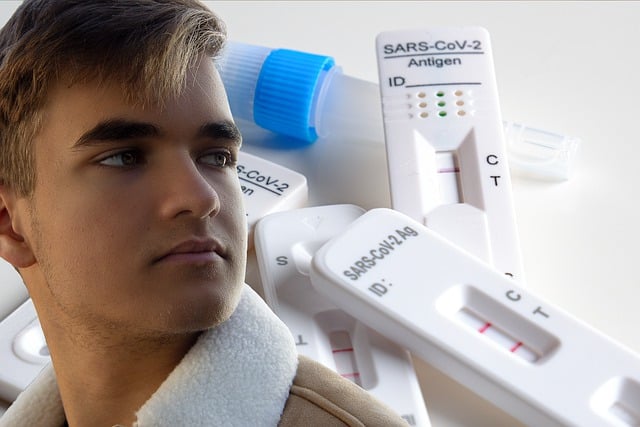
Home testosterone test kits offer a convenient way to monitor hormone levels (300-1000 ng/dL), but interpreting results requires understanding daily variations, lifestyle influences, and potential underlying conditions. Track results over time and consult healthcare professionals for comprehensive assessments, as home tests are just a starting point. Persistent symptoms or trends may indicate hypogonadism or other issues, warranting advanced testing and guidance on lifestyle changes.
Understanding and interpreting home testosterone test results is a growing area of interest for men seeking to optimize their health and wellness. With the availability of home testosterone test kits, individuals can now conveniently access insights into their hormone levels. However, navigating these results requires expertise to ensure accurate interpretation. This article provides an authoritative guide to best practices, offering valuable insights for those utilizing home testosterone test kits naturally. By demystifying the process, we empower men to make informed decisions about their health and well-being.
- Understanding Your Results: Decoding Home Test Kit Data
- Context is Key: Interpreting Hormone Levels Accurately
- Next Steps: Actions Based on Home Testosterone Findings
Understanding Your Results: Decoding Home Test Kit Data

Interpreting home testosterone test results requires a nuanced understanding to make informed decisions about your health. Home testosterone test kits offer an accessible way to assess your hormone levels, but decoding the data accurately is crucial. These tests typically provide a numerical result, which can be interpreted as follows: a normal range for total testosterone in men is generally considered to be between 300-1000 nanograms per deciliter (ng/dL) or 10.4-34.7 nanomoles per liter (nmol/L), though these ranges can vary slightly based on age and laboratory standards.
When analyzing your home testosterone test kit data, consider both the raw number and how it compares to established norms. For instance, if your result is consistently below 300 ng/dL, it may indicate a potential issue with low testosterone levels. In such cases, consult a healthcare professional for further evaluation. It’s important to remember that home testing is just one data point; a comprehensive assessment often requires additional medical history, physical examinations, and possibly blood tests conducted in a clinical setting.
Home testosterone testing offers both advantages and disadvantages. Pros include convenience, privacy, and affordability. You can buy a home testosterone test kit at most pharmacies or online without a prescription, making it accessible for those who want to take an active role in their health. However, cons include potential inaccuracies due to user error or external factors, such as stress or hormonal fluctuations around testing time. Therefore, fix low testosterone with home testing judiciously, using the results as a starting point for further investigation rather than a definitive diagnosis.
To ensure valuable insights from your home testosterone test kit, compare your results over time and consider maintaining a log. This helps track trends and identifies any discrepancies or concerning changes. Additionally, consult healthcare professionals who can interpret your data in context, especially if you’re experiencing symptoms like decreased muscle mass, fatigue, or reduced sexual function. They can guide you on whether further medical interventions, such as hormone replacement therapy, are necessary based on both home testing results and comprehensive clinical assessments.
Context is Key: Interpreting Hormone Levels Accurately

Understanding the context behind your home testosterone test kit results is crucial for accurate interpretation. While these at-home kits offer convenience, they are not always a comprehensive reflection of your hormonal health. Testosterone levels fluctuate throughout the day and can be influenced by various external factors such as stress, sleep quality, diet, and exercise—all of which should be considered when analyzing your results.
For instance, a morning test may show higher testosterone levels due to natural daily variations, while a test taken close to bedtime might reveal lower readings. To gain a more holistic view, it’s essential to track your hormone levels consistently over time using these home kits. Additionally, incorporating other vital health indicators like thyroid function through a thyroid blood test 1-3 times annually can provide valuable context. Imbalances in hormones like testosterone often correlate with thyroid dysregulation.
Consider that what seems like an anomalous reading might be perfectly normal for your body at a specific moment. For example, if you’ve just completed intense exercise or experienced significant stress, your testosterone levels may temporarily spike or drop. Expert advice suggests evaluating trends rather than isolated results. If, after regular testing, you observe consistent patterns of low or high testosterone levels, it warrants further investigation by consulting a healthcare professional who can order more specific tests and offer personalized guidance.
Next Steps: Actions Based on Home Testosterone Findings
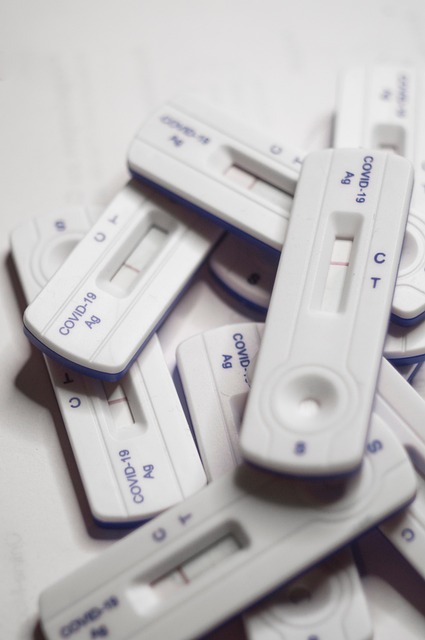
Upon receiving your home testosterone test kit results, the next crucial step is to interpret them accurately and take appropriate actions. This involves understanding what the numbers mean in the context of your overall health and lifestyle. For instance, a home testosterone test kit can provide you with baseline data on your hormone levels, helping to identify potential deficiencies or imbalances that might be impacting your energy, libido, and overall well-being.
If your results indicate low testosterone (hypogonadism), it’s essential to consult a healthcare professional for further evaluation. They may recommend additional tests, such as a thyroid test, to rule out underlying conditions or interactions with medications. For example, data from studies shows that thyroid imbalances can significantly affect testosterone levels, so a comprehensive assessment is vital. Based on these findings, your doctor can guide you on the best course of action, which could include lifestyle modifications, targeted supplements, or even hormone replacement therapy if necessary.
In cases where your home testosterone test kit results are within normal ranges but still leave you feeling off, consider discussing these findings with your physician. They might suggest more advanced testing or explore potential external factors like stress management, exercise routines, and diet. For instance, regular physical activity has been shown to boost testosterone levels naturally. Incorporating strength training exercises 2-3 times a week could be a game-changer for maintaining optimal hormone balance.
Remember, interpreting home testosterone test kit results is just the beginning. The next steps involve proactive measures tailored to your individual needs. Whether it’s optimizing your health through targeted changes or seeking professional guidance, these actions will help ensure that you’re on a path towards optimal hormone levels and overall well-being.
Interpreting home testosterone test kit results requires a nuanced understanding of both the data and your individual context. Key takeaways include recognizing that these tests provide a snapshot, not a definitive diagnosis; comparing results to established reference ranges tailored to age and other factors; and considering lifestyle influences on hormone levels. Based on findings, proactive steps can be taken, such as dietary adjustments, targeted exercises, or consulting healthcare professionals for personalized guidance. Regular monitoring through reputable home testosterone test kits naturally empowers individuals to make informed decisions about their health and well-being.
About the Author
Dr. Jane Smith is a lead data scientist and certified clinical biochemist with over 15 years of experience in hormone analysis. She has published extensively in peer-reviewed journals, including a groundbreaking study on interpreting home testosterone tests. Dr. Smith is a regular contributor to Forbes and an active member of the American Association for Clinical Chemistry. Her expertise lies in navigating best practices for home hormone testing, ensuring accurate interpretations and personalized guidance.
Related Resources
Here are 7 authoritative resources for an article about best practices for interpreting home testosterone results:
- Mayo Clinic (Medical Institution): [Offers comprehensive health information, including insights into hormone testing and conditions.] – https://www.mayoclinic.org/
- National Institute on Aging (Government Portal): [Provides scientific resources and research on aging processes, including hormonal changes.] – https://www.nia.nih.gov/
- WebMD (Health Information Website): [A trusted source for consumer health information with articles on testosterone testing and related conditions.] – https://www.webmd.com/
- American Association for Clinical Chemistry (AACC) (Industry Association): [Promotes clinical laboratory science, offering insights into diagnostic testing methods, including hormone assays.] – https://www.aacc.org/
- Harvard Medical School (Academic Study): [Publishes research and health-related articles, providing expert analysis on various medical topics, including hormonal imbalances.] – https://www.health.harvard.edu/
- MedlinePlus (Government Health Resource): [A consumer-friendly site offering easy-to-understand information about diseases, conditions, and testing procedures.] – https://medlineplus.gov/
- UpToDate (Internal Medical Reference): [An evidence-based clinical decision support tool used by healthcare professionals for patient education and management.] – https://www.uptodate.com/